

Al tuo fianco per orientarti nel mondo dei fondi europei
Coopération Bancaire pour l’Europe - GEIE
il Ponte tra l’Europa e il Territorio

Un partner esperto per affrontare la complessità dei finanziamenti europei con chiarezza, metodo e visione.
Il tuo partner a Bruxelles per le opportunità dell’Unione Europea
Coopération Bancaire pour l’Europe – GEIE (CBE-GEIE) è un Gruppo Europeo di Interesse Economico con sede a Bruxelles, fondato nel 1992.
Da oltre 30 anni, affianchiamo imprese, banche, enti pubblici e organizzazioni di diversa natura nell’orientarsi tra politiche, bandi di finanziamento e progetti europei.
Siamo un ponte tra le opportunità dell’Unione Europea e le organizzazioni che desiderano crescere, innovare e collaborare in un contesto internazionale.
Esperienza, metodo e visione per orientarsi tra i finanziamenti UE
Anni di esperienza nella gestione di progetti europei
Il nostro team è costantemente impegnato nella ricerca delle migliori opportunità di finanziamento offerte dall’UE sia per finanziare progetti nei quali è direttamente coinvolto, sia in qualità di consulente per i propri membri Associati e clienti.






Affidati alla nostra esperienza per accedere ai finanziamenti europei e sviluppare soluzioni concrete.
Hai un progetto?
Noi ti aiutiamo a realizzarlo
Noi ti aiutiamo a realizzarlo
Tieniti aggiornato su novità normative,
opportunità di finanziamento e iniziative UE rilevanti per il tuo settore.
opportunità di finanziamento e iniziative UE rilevanti per il tuo settore.
Notizie europee da non perdere
In evidenza
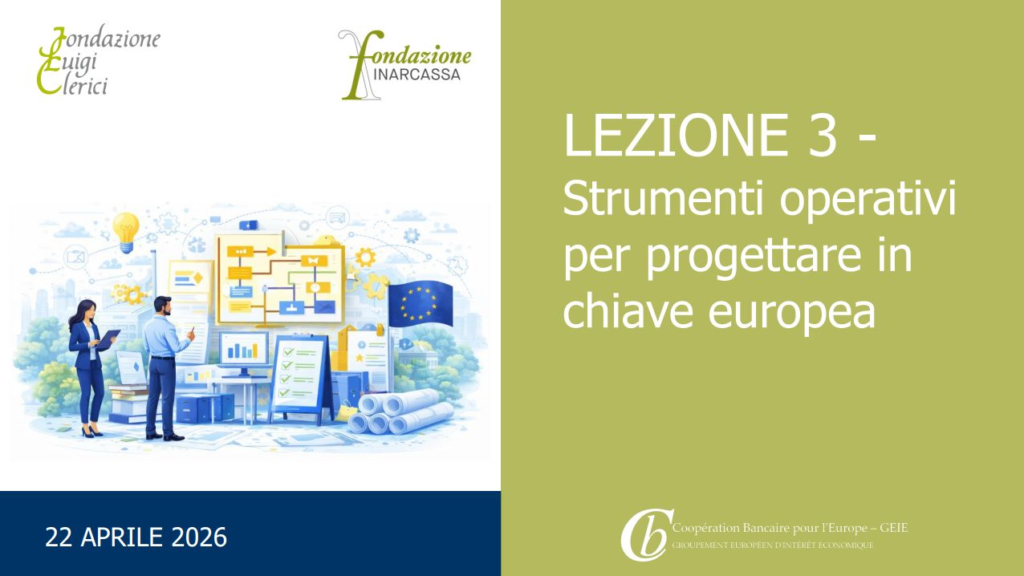
Terza lezione del webinar di europrogettazione di CBE in collaborazione con Fondazione Inarcassa
Dalla strategia all’azione: padroneggiare gli strumenti operativi per i progetti UE 𝐂𝐁𝐄 è orgogliosa di proseguire la collaborazione con Fondazione Inarcassa per il 𝘗𝘳𝘰𝘫𝘦𝘤𝘵 𝘓𝘢𝘣, un’iniziativa formativa specializzata pensata per fornire ad architetti e ingegneri le competenze necessarie per orientarsi nel mondo dei finanziamenti europei.La terza sessione, tenutasi il 22 aprile, ha spostato l’attenzione dai […]